
CPL is one of the most frustrating conditions for horse owners. You see your horse’s legs changing, getting thicker, feeling hard or developing scabs… and no matter how carefully you keep them dry, wash or care for them: it never really seems to improve.
What is CPL in horses?
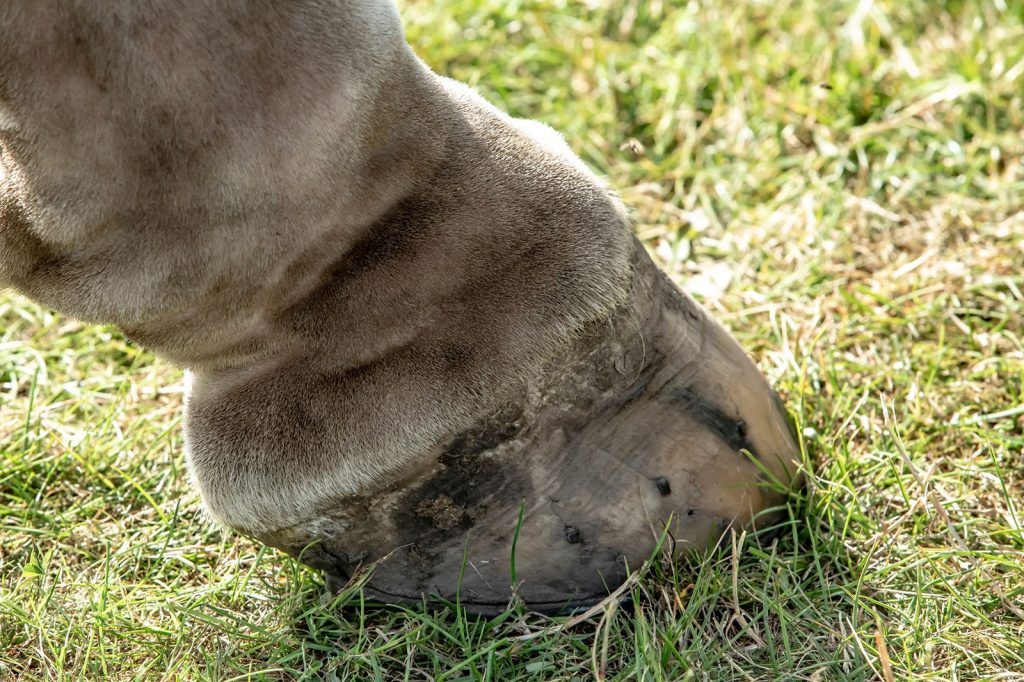
CPL stands for Chronic Progressive Lymphedema. It’s a condition in which the lymphatic vessels no longer function properly, causing waste products to remain in the lower leg. This leads to:
-
Thick, hard legs
-
Swelling around the fetlock
-
Crust formation (sometimes deep cracks)
-
Reduced suppleness
-
Sometimes pain or lameness
It occurs mainly in breeds with a lot of feathering, such as Friesians, Cobs and draft horses, but it can develop in any horse.
How does CPL develop?
CPL doesn’t appear overnight. It’s a process that has usually been going on for quite some time, often a combination of:
-
An overloaded lymphatic system
The lymphatic system is responsible for removing waste products.
When it slows down, the lower leg starts to “fill up”. -
Chronic stress on the skin
Think of mud, rubbing, mites, mud fever or a weakened skin barrier. -
Connective tissue losing its elasticity
This makes it harder for fluid to drain away, which further increases the pressure in the lower legs. -
Hereditary predisposition
Some breeds are simply more prone to it.
So CPL is not just a skin problem; it’s a combination of skin, connective tissue and a disrupted lymphatic system.
How do you recognize CPL at an early stage?
Many owners only notice it once the symptoms are clearly visible, but CPL often announces itself more subtly:
-
“Stable legs” in the morning that no longer go down
-
Small scabs in the hollow of the fetlock
-
Rough, bumpy skin around the fetlock
-
Mild leg swelling after exercise
-
The horse moves slower or stiffer than usual
The earlier you catch it, the better you can slow down its progression.
What can you do as an owner?
Although CPL is chronic, there is a lot you can do to support your horse and reduce symptoms.
-
Movement, movement, movement
Movement stimulates blood flow and lymph flow.
Lots of standing still = more swelling. -
Good skin care
-
Dry, clean legs
-
Regularly check for scabs
-
Don’t use aggressive products
-
For horses with feathering: trim in time to let air reach the skin
-
-
Adjust management
-
As much turnout as possible
-
Dry, clean footing
-
A diet low in sugars
-
-
Support the connective tissue and lymphatic system
CPL is largely about stiffening connective tissue and an overloaded lymphatic system. That’s why support “from the inside out” is often much more effective than just ointments and washing.
How Nano CellCare therapists support CPL in practice
With CPL one thing is very clear: the biggest blockage often lies in the lymphatic system and connective tissue. Nano CellCare therapy is used by therapists as a natural form of support at cell level, using body-identical substances that can be absorbed through the skin. This can support the body with:
-
Better fluid balance
-
Reducing tension in skin & connective tissue
-
Processing waste products more efficiently
-
Helping to calm the skin barrier
-
Supporting circulation in the legs
Many owners notice that their horse:
-
Has less thick legs
-
Develops fewer crusts
-
Moves more freely
-
Shows more relaxation
It is not a cure—CPL remains a chronic condition—but it can help slow progression and greatly improve your horse’s comfort.
Bea, Monique’s mare, always had thick CPL legs that filled up quickly.
“After two treatments her CPL legs were completely gone and it hasn’t come back.”
— Monique
When is it smart to call in a therapist?
-
If your horse’s legs are swollen every day
-
If there are recurring mud fever/CPL-like patches
-
If you notice your horse becoming stiffer
-
If you feel that the skin is ‘hard’
-
If scabs or cracks keep coming back
The earlier you start support, the bigger the difference it can make in the course of CPL.
Unsure whether your horse has CPL?
Feel free to ask advice from a Nano CellCare therapist near you.
They’ll think along with you, look at the legs and can assess which kind of support best suits your horse.